The implementation of the EES and ETIAS systems will enable the automation of entry and exit control processes for citizens of third countries and will improve the passenger experience, while ensuring a higher level of security and control in international passenger flows.
With this initiative, the Port Authority of Las Palmas is advancing the digital transformation of its infrastructure, aligning itself with European strategies for smart border management.
The project is part of the cooperation agreement signed between Puertos del Estado and the State Secretariat for Security for its deployment in Spanish ports.
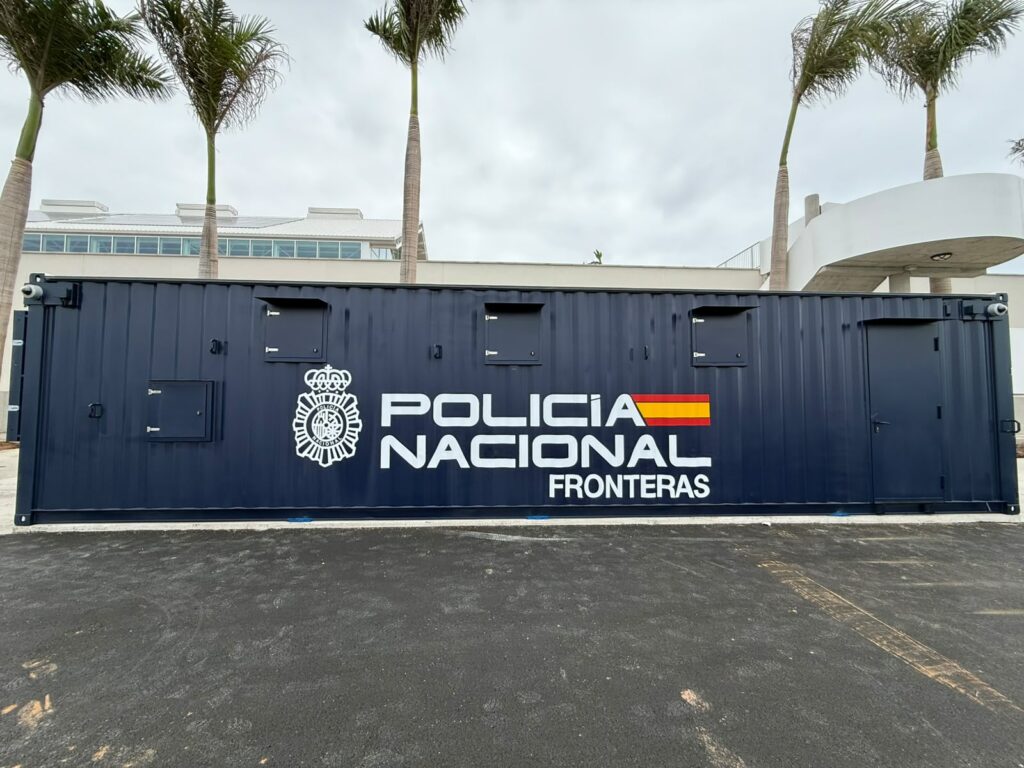
The Port Authority of Las Palmas has installed the first container of the Border Control Point that will enable the automation of entry and exit control processes for citizens of third countries.
This is the first of two containers purchased by the Port Authority for this purpose, both of which have been installed at the Cruise Pier of the Port of Las Palmas. They form part of the contract for the supply, installation and comprehensive maintenance of automated equipment for border control and passenger information services within the framework of the European Entry/Exit System (EES) and the European Travel Information and Authorisation System (ETIAS).
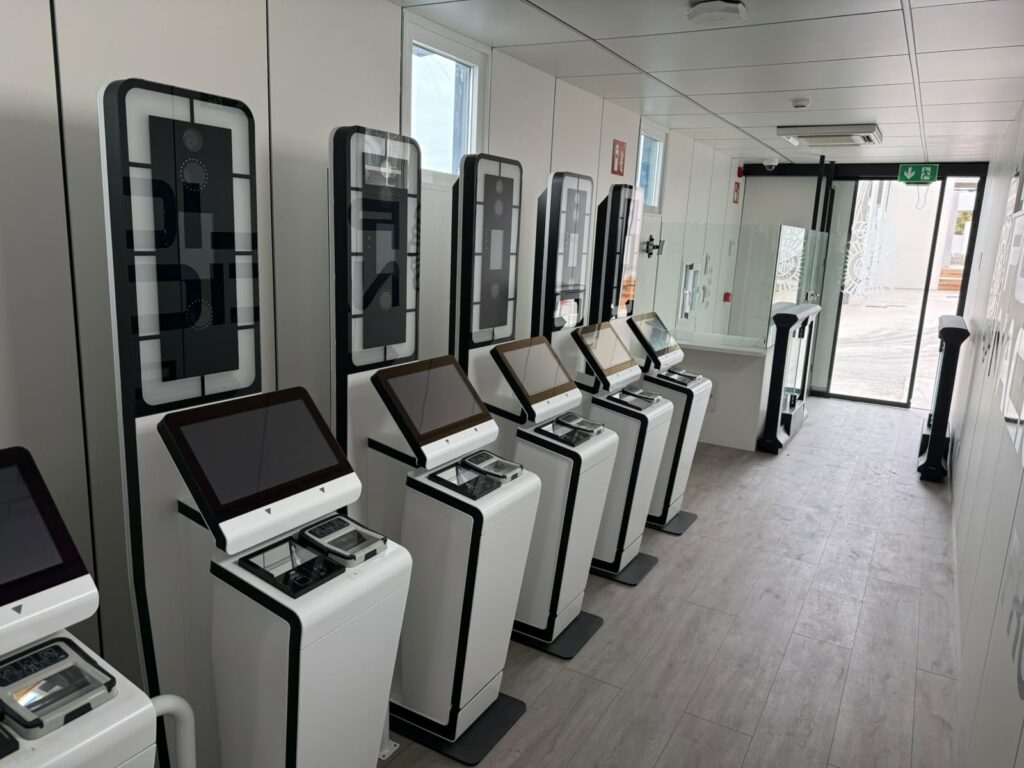
This first container is equipped with eight registration kiosks, which will complement the existing manual procedures currently carried out at border control points.
The President of the Port Authority of Las Palmas, Beatriz Calzada, stated that these containers represent a key step in the digitalisation of the port system and allow the Port of Las Palmas to continue advancing in the digital transformation of its infrastructure, aligning itself with European smart border management strategies and consolidating its position as a strategic hub for access control to the Schengen Area.
In this regard, she added: “The implementation of EES and ETIAS will bring a substantial improvement to the passenger experience, while guaranteeing a higher level of security and control over international passenger traffic.”
This project falls within the framework of Regulation (EU) 2017/2226 establishing the Entry/Exit System (EES), as well as the European Travel Information and Authorisation System (ETIAS), and responds to the cooperation agreement signed between Puertos del Estado and the State Secretariat for Security for its deployment in Spanish ports.
Project investment and technical scope
The project, awarded to Thales-TIS with an awarded contract value of €1,198,991.89 (excluding IGIC), is funded by the European Internal Security Fund, with €787,940.54 allocated for the acquisition and installation of equipment and €245,136.94 for maintenance.
In addition to the containers, the contract includes the supply and implementation of registration and verification tablets for the ports of Las Palmas, Arrecife and Puerto del Rosario, video surveillance systems, telecommunications infrastructure through fibre optic connections between the National Police border control point and the Cruise Terminal, as well as signage and the integration of passenger information services.
Improving border security and efficiency
The implementation of the EES system will enable the electronic registration of entry and exit data for travellers from third countries, contributing to improved management of migration flows, greater efficiency and speed in passport controls, strengthened security at the European Union’s external borders, and support for the prevention and investigation of serious crimes, including terrorism.
To support operations, the Port Authority has also awarded a complementary contract for passenger assistance and information services to Activa Forum Canarias. The service is aimed at facilitating the use of the equipment and optimising queue management at control points, with operations beginning in May. This contract also receives €142,395.25 in European funding.