
The Port of Las Palmas has officially inaugurated its new cruise terminal, a landmark infrastructure project set to redefine the port’s international profile and strengthen the Canary Islands’ position in the global cruise industry.
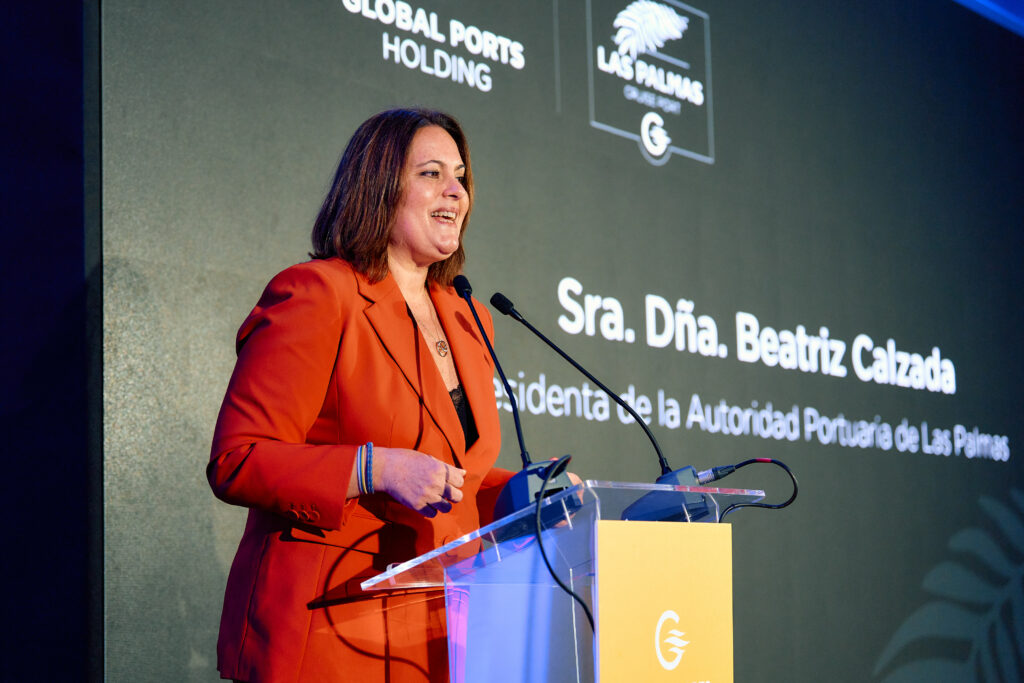
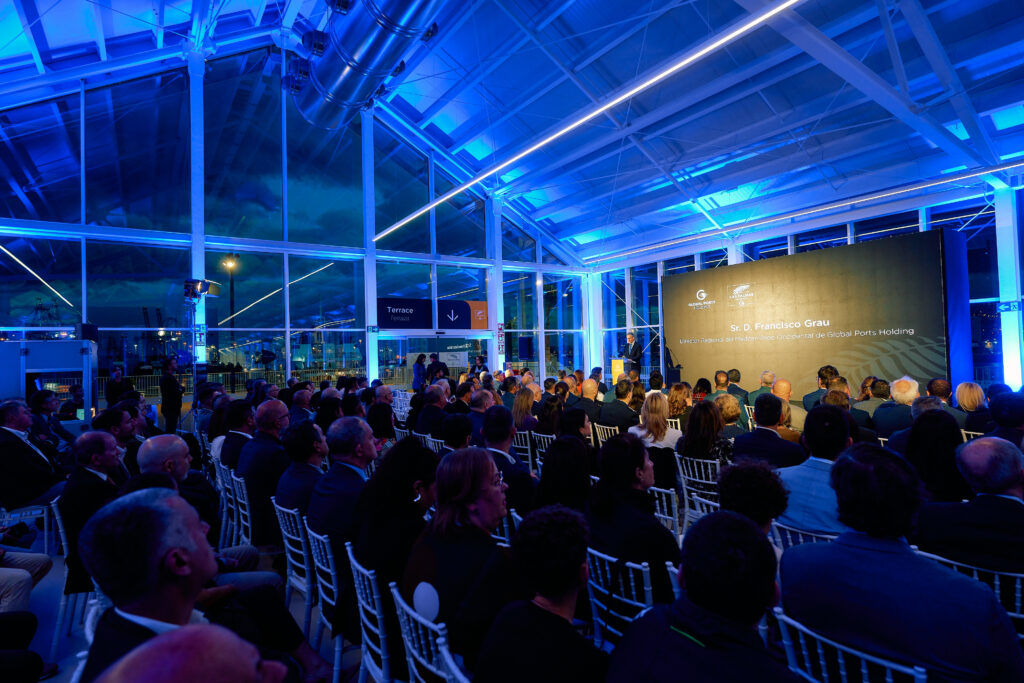
The opening ceremony brought together key institutional and industry figures, including Port Authority President Beatriz Calzada, Managing Director Francisco Javier Trujillo, Chairman of Spain’s state ports system Gustavo Santana, and Global Ports Holding CEO Mehmet Kutman, among others. The event marks the culmination of one of the most significant port projects in the province in recent years.
Operated by Global Ports Canary Islands, the new facility reinforces Las Palmas’ role as a strategic hub in the Mid-Atlantic and underscores a commitment to modernization, sustainability and enhanced passenger experience. Its launch comes at a particularly strong moment for the sector, after ports under the Las Palmas Port Authority surpassed 2 million cruise passengers for the first time in 2025, reaching 2.1 million and a 44.3% market share in a record-breaking year.
Calzada said the terminal represents “far more than a new infrastructure,” highlighting its role in supporting future growth and maintaining the confidence of major international cruise lines. She also emphasized its ambition to serve as a public space, integrating the port more closely into the social and cultural life of the city.
Kutman, CEO of Global Ports Holding, pointed to the long-term potential of the Canary Islands as a leading cruise destination, noting that the Port of Las Palmas holds a strategic position within global cruise itineraries. He described the new terminal as a key step in strengthening the destination’s competitiveness and delivering long-term value through high-quality infrastructure.
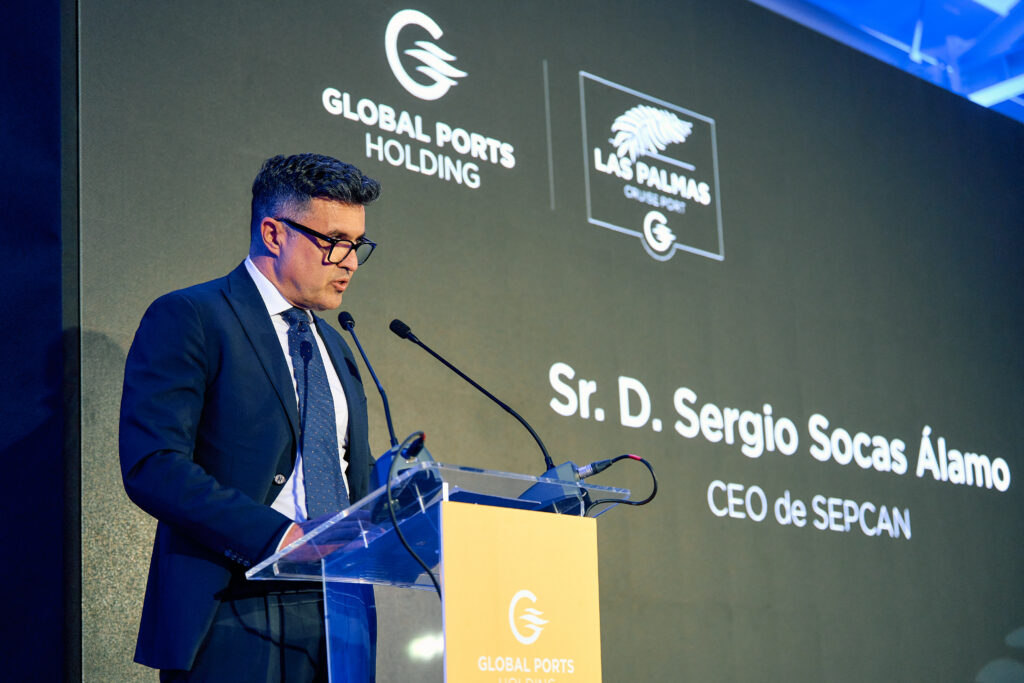
The project also reflects close collaboration between the Port Authority, Global Ports Holding and local partner SEPCAN, aimed at delivering a modern and sustainable facility that benefits both cruise operators and passengers.
Spain’s state ports chairman Gustavo Santana stressed that the development aligns with a broader commitment to world-class port infrastructure, sustainability and innovation across the national port system.
Sustained confidence from major cruise lines, along with new operators and itineraries, has helped consolidate Las Palmas as one of Europe’s leading cruise hubs. This momentum is further reinforced by the selection of the port as host of Seatrade Med 2026, the largest cruise industry event in Europe, to be held on September 16–17.
A next-generation terminal transforming the passenger experience
The new terminal, the largest of its kind in Europe, represents an investment of more than €38 million, with €34 million provided by Global Ports Canary Islands and €6.3 million by the Las Palmas Port Authority.
The two-storey building spans 14,000 square meters and features three boarding bridges, with capacity to handle up to four vessels simultaneously. It is designed to ensure efficient operations for both transit calls and homeport cruises.
The development also includes a 17,800-square-meter outdoor area with pedestrian zones, landscaped spaces and a restored palm grove, enhancing integration between the port and the city.
In total, the four berthing areas offer 1,587 linear meters with an 11-meter draft, enabling the port to accommodate large vessels and meet growing demand in the coming years.
The terminal is equipped with restaurants, comfortable waiting areas, retail spaces and full accessibility features, positioning it among the most modern and efficient cruise facilities in the sector.
Built with sustainability in mind, the project incorporates recycled materials, energy-efficient systems and advanced technologies designed to minimize environmental impact.
Strengthening Canarias’ global position
The inauguration of the new terminal marks a strategic milestone, placing the Port of Las Palmas among Europe’s leading cruise infrastructure providers. By enhancing passenger experience and operational capacity, the development boosts the Canary Islands’ competitiveness in international cruise markets and supports broader economic and tourism growth across the archipelago.