The President of the Port Authority of Las Palmas outlined the objectives the public body aims to achieve in 2026 during a business breakfast organised by La Provincia–Prensa Ibérica
The main challenge is to gain additional surface area at the Port of Las Palmas, for which more than €122 million will be invested in major works
Las Palmas de Gran Canaria, Monday, 9 February 2026
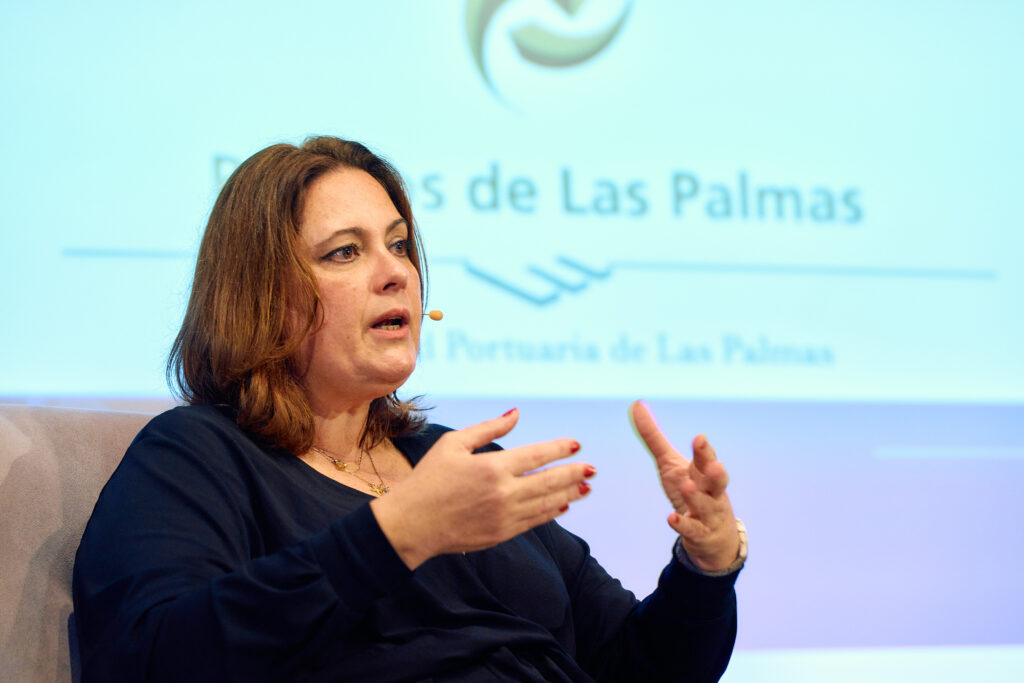
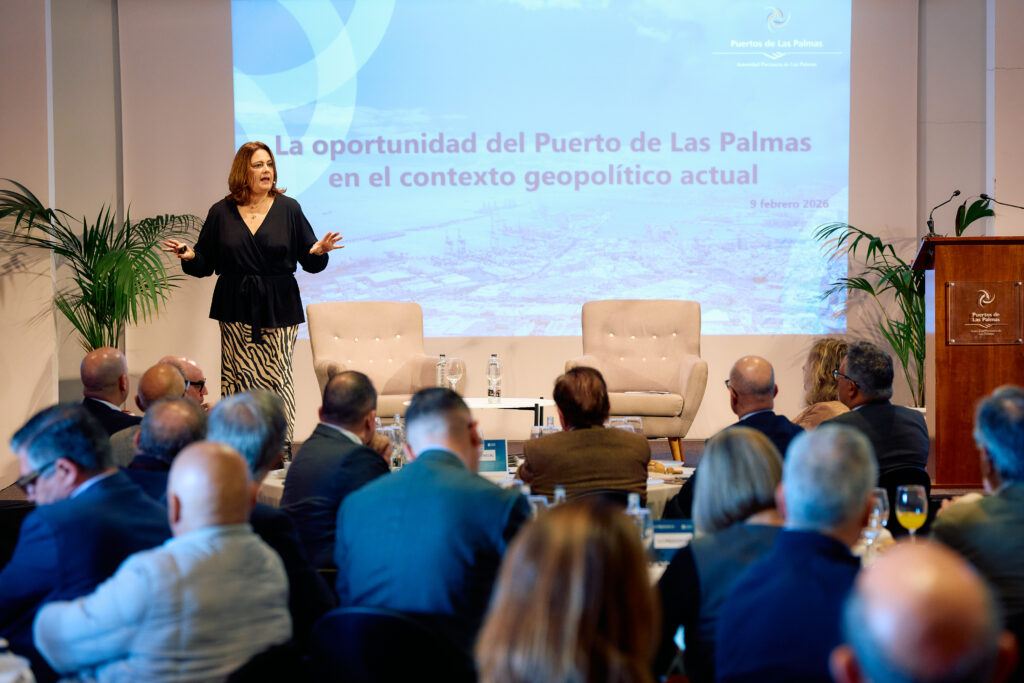
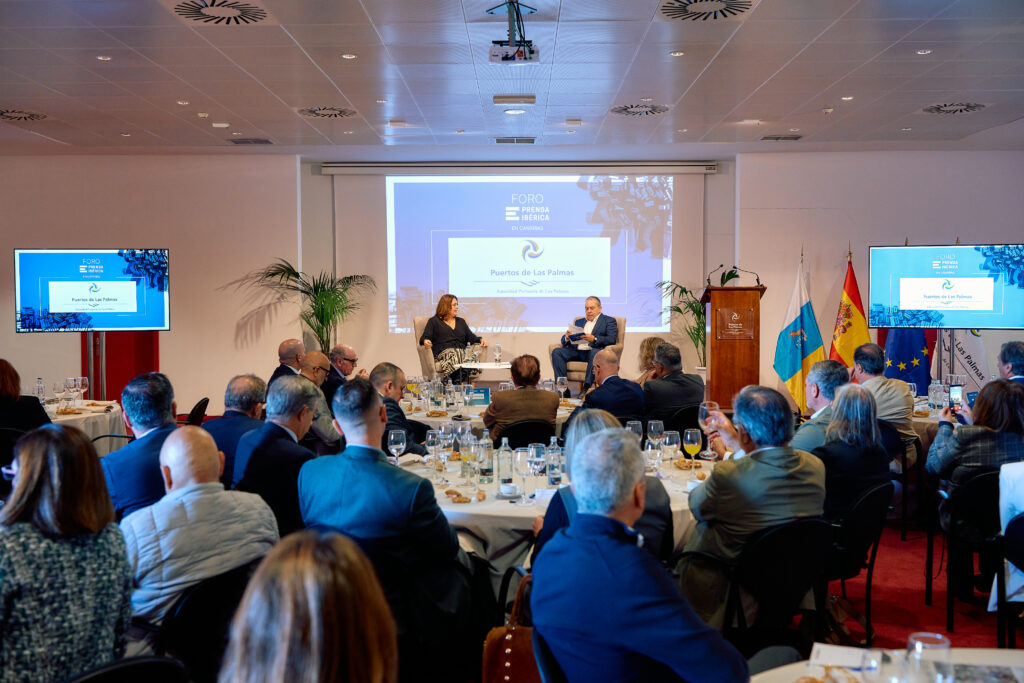
The Port Authority of Las Palmas will invest €122.82 million in major works to be carried out throughout 2026. The objective is to gain additional surface area, through significant capital investment. This was stated on Monday by the President of the public body, Beatriz Calzada, during the business breakfast organised by La Provincia–Prensa Ibérica at the Free Trade Zone building of the Port of Las Palmas.
The President explained that the works planned for this year include the third phase of the extension of the Reina Sofía breakwater, with an investment of €20.5 million, co-financed by ERDF funds; the quay attached to the Reina Sofía breakwater, with an investment of €45.32 million; the extension of the Juan Sebastián Elcano quay, at a cost of €50 million; the second phase of the extension of the passenger quay berthing line, with a budget of €3 million; the Ro-Ro ramp at the León y Castillo quay, with an investment of €1.5 million; and draught improvement works in the outer basin of the León y Castillo quay, with an investment of €2.5 million.
During the discussion, Calzada highlighted the value of the port system as critical infrastructure for the connectivity and competitiveness of the Archipelago, underlining the Port of Las Palmas’ ability to adapt to changing international scenarios and to sustain economic activity linked to trade, maritime services and global logistics chains.
In her address, the President emphasised the main indicators at the close of 2025, which place the Port Authority of Las Palmas in a phase of consolidation and growth: more than 36.5 million tonnes of total traffic, over 1.5 million containers, more than 2 million cruise passengers and 2.6 million tonnes related to bunkering. In this regard, she stated that “these are objective figures and they reflect not only the positive momentum experienced by this part of the world, but also the responsiveness our ports have demonstrated in the face of increased maritime traffic demand”.
“These figures,” Calzada noted, “must be viewed within the current geopolitical context marked by the Red Sea crisis, the situation in the Suez Canal, the war in Ukraine and the uncertainty associated with new trade policies, such as the tariffs announced by the United States. All of this has become a golden opportunity for the Port of Las Palmas thanks to our role as a platform for transit, storage, services and redistribution, and to our geostrategic position—qualities that strengthen our appeal in the international maritime arena,” the President stated.
Likewise, the President stressed the importance of interpreting the positive results with caution and a medium-term perspective. “We must be realistic about our figures and be prepared for when the market stabilises and some of these traffics adjust. What matters is that the responsiveness of the port system has been demonstrated and that we are building trust,” she noted in reference to the evolution of international routes.
Calzada placed the objectives for 2026 within a strategy of diversification and openness to new markets and opportunities, with particular focus on the development of new trade routes to the Americas, the potential of Mercosur and operational relations within the regional environment, against a backdrop of international uncertainty. In parallel, she pointed to areas of growth linked to the energy transition and new business opportunities, such as offshore wind, quay electrification and the adoption of more efficient and less polluting fuels.